
PCOD Symptoms, Causes, Treatment & Diet: A Complete Guide to Managing PCOD Naturally
Learn everything about PCOD including symptoms, causes, diagnosis, treatment options, diet plan, foods to eat, foods to avoid, lifestyle tips, and frequently asked questions.
Admin
6/24/20263 min read
Polycystic Ovarian Disease (PCOD) is one of the most common hormonal conditions affecting women of reproductive age. It can influence menstrual cycles, fertility, weight, skin health, and metabolism. While PCOD cannot always be "cured," it can often be managed effectively through healthy eating, regular physical activity, stress management, and medical care when needed.
This guide explains the PCOD symptoms, causes, diagnosis, treatment options, and the best diet for managing PCOD.
What is PCOD?
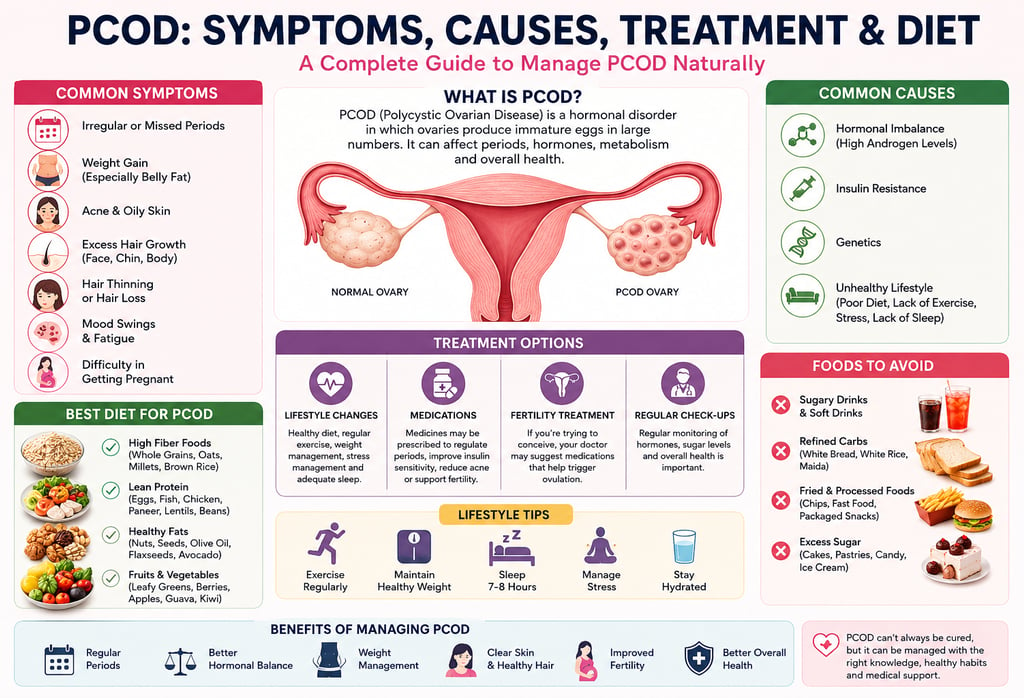
PCOD (Polycystic Ovarian Disease) is a hormonal disorder in which the ovaries may contain multiple immature or partially developed follicles. These follicles may not mature or release an egg regularly, which can contribute to irregular menstrual cycles and other symptoms.
Many women with PCOD also experience insulin resistance and higher levels of androgens (male-type hormones), which can affect weight, skin, and hair.
Common Symptoms of PCOD
Symptoms vary from person to person. Some women have mild symptoms, while others experience more noticeable changes.
Irregular or Missed Periods
One of the most common signs of PCOD is infrequent, irregular, or absent menstrual periods.
Weight Gain
Many women with PCOD gain weight easily, especially around the abdomen, and may find it difficult to lose weight.
Acne and Oily Skin
Hormonal changes can increase oil production, leading to acne and oily skin.
Excess Hair Growth
Higher androgen levels may cause increased hair growth on the face, chin, chest, abdomen, or back.
Hair Thinning
Some women experience thinning hair or hair loss from the scalp.
Difficulty Getting Pregnant
Irregular ovulation may make conception more difficult for some women.
Fatigue
Hormonal changes and insulin resistance can contribute to tiredness and low energy.
Dark Patches of Skin
Some people develop darker, velvety patches of skin, particularly around the neck, underarms, or groin, which may be associated with insulin resistance.
What Causes PCOD?
The exact cause is not fully understood, but several factors are thought to contribute.
Hormonal Imbalance
Higher androgen levels can interfere with normal ovulation.
Insulin Resistance
When the body becomes less responsive to insulin, the pancreas produces more insulin. Elevated insulin levels may increase androgen production and affect ovulation.
Genetics
A family history of PCOD or related metabolic conditions may increase the likelihood of developing PCOD.
Lifestyle Factors
Low physical activity, poor dietary habits, inadequate sleep, and excess body weight can worsen symptoms, although they are not the sole cause of PCOD.
Risk Factors
You may be at increased risk if you have:
A family history of PCOD
Overweight or obesity
Insulin resistance or prediabetes
Type 2 diabetes
Sedentary lifestyle
How is PCOD Diagnosed?
A healthcare provider may diagnose PCOD based on:
Medical history
Menstrual history
Physical examination
Blood tests to assess hormone levels and metabolic health
Pelvic ultrasound (when appropriate)
Diagnosis is based on the overall clinical picture rather than a single test.
PCOD Treatment
Treatment depends on your symptoms, health goals, and whether pregnancy is desired.
Healthy Lifestyle Changes
Lifestyle changes are often the first step in managing PCOD.
Maintain a healthy weight
Exercise regularly
Eat a balanced diet
Sleep 7–9 hours
Reduce stress
Stay hydrated
Medications
Depending on your symptoms, a doctor may recommend medications to:
Help regulate menstrual cycles
Improve insulin sensitivity
Manage acne or excess hair growth
Support ovulation if pregnancy is desired
Always take medications under the guidance of a qualified healthcare professional.
Best Diet for PCOD
A balanced diet can support weight management, blood sugar control, and overall health.
Eat More Of Whole Grains
Oats
Brown rice
Whole wheat
Millets
Quinoa
Lean Protein
Eggs
Fish
Chicken
Paneer
Tofu
Lentils
Chickpeas
Beans
High-Fiber Foods
Vegetables
Fruits
Whole grains
Legumes
Healthy Fats
Almonds
Walnuts
Flaxseeds
Chia seeds
Pumpkin seeds
Olive oil
Low-Glycemic Fruits
Apples
Berries
Pears
Guava
Oranges
Kiwi
Foods to Avoid
Limiting these foods may help improve blood sugar control and support overall health.
Sugary drinks
Cakes
Pastries
White bread
Highly processed snacks
Fried foods
Fast food
Candy
Sweetened cereals
Excess sweets
Sample One-Day PCOD Meal Plan
Breakfast
Vegetable oats with boiled eggs or sprouts
Mid-Morning Snack
Apple with a few almonds
Lunch
Two whole wheat rotis, dal, mixed vegetables, and salad
Evening Snack
Roasted chana with green tea
Dinner
Grilled paneer or chicken with sautéed vegetables
Exercise for PCOD
Regular physical activity can improve insulin sensitivity and support weight management.
Aim for at least 150 minutes of moderate exercise each week.
Good options include:
Brisk walking
Cycling
Swimming
Strength training
Yoga
Pilates
Can PCOD Be Cured?
There is currently no single cure for PCOD. However, many people successfully manage symptoms through healthy lifestyle habits and appropriate medical care. Consistent treatment can improve menstrual regularity, metabolic health, and quality of life.
Possible Complications
Without appropriate management, PCOD may increase the risk of:
Insulin resistance
Prediabetes or type 2 diabetes
High cholesterol
High blood pressure
Difficulty with fertility
Sleep problems
Emotional health challenges such as anxiety or depression
Not everyone with PCOD develops these complications.
Frequently Asked Questions
What is the first sign of PCOD?
Irregular menstrual periods are among the most common early signs, though symptoms vary from person to person.
Is PCOD serious?
PCOD can affect long-term health if left unmanaged, but many people lead healthy lives with appropriate treatment and lifestyle changes.
Can I get pregnant with PCOD?
Yes. Many women with PCOD conceive naturally, while others may benefit from medical support if they experience ovulation problems.
Which foods are best for PCOD?
Whole grains, vegetables, fruits, lean proteins, legumes, and healthy fats are generally recommended as part of a balanced eating pattern.
Can exercise help PCOD?
Yes. Regular physical activity can improve insulin sensitivity, support weight management, and contribute to overall health.
Final Thoughts
PCOD is a common condition, and with the right approach, many women successfully manage their symptoms and improve their quality of life. A healthy diet, regular exercise, adequate sleep, stress management, and ongoing medical care when needed can make a meaningful difference.
If you notice symptoms such as irregular periods, persistent acne, excess hair growth, or difficulty conceiving, consult a qualified healthcare professional for an accurate diagnosis and a personalized treatment plan.